
Extended version of the W3DZZ-antenna
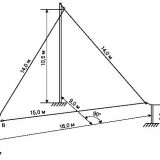
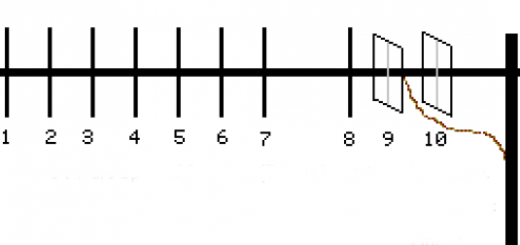
The antenna, shown in the drawing, is an extended version of the well-known W3DZZ-antenna, adapted for work on 160, 80, 40 and 10 m bands. For installation of the antenna it is necessary space...

The antenna, shown in the drawing, is an extended version of the well-known W3DZZ-antenna, adapted for work on 160, 80, 40 and 10 m bands. For installation of the antenna it is necessary space...
Six Meters (50-54 MHz) is known as “The Magic Band” to many of its fans, but the best description I ever heard came from a ham I worked during a frantic summer Sporadic-E opening:...
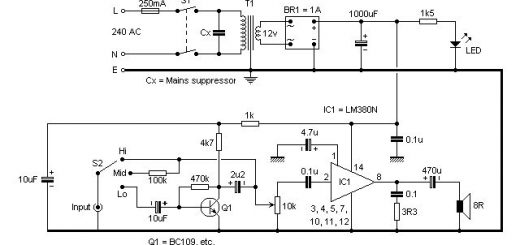
I am often asked if I can replace a turntable having a piezo cartridge with a modern stereo turntable using a magnetic phono cartridge. I usually reply with a qualified “Yes but you need...
The Barlow -Wadley receiver was made in South Africa in the 1970s. It uses the Wadley drift-cancelling loop principle first used commercially in the Racal RA-17 radio receivers. Dr TL Wadley. The originator, used...
The Hallicrafters SX-130 was made from 1965 to 1969. It is a single conversion superhet covering 0.56 to 31.5 MHz in 4 bands. It is a single superhet with an intermediate frequency (I.F.) of...
The Nordmende Globetraveller III was a high quality radio made in the late ’60s/ early ’70s. It receives LW/MW and FM, as well as 11 shortwave broadcast bands as follows: (1.5 – 3.5 MHz...
Philips was founded in Eindhoven in the Netherlands in 1891 to meet the growing demand for light bulbs as a result of the commercialisation of electricity. In 1926 Philips introduced the miniwatt range of...
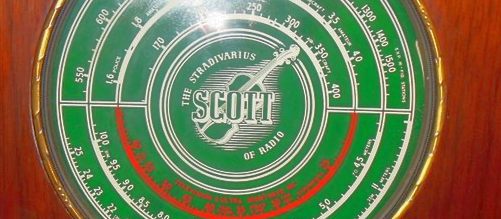
Earnest Humphrey Scott emigrated from New Zealand to America in the early 1920’s and started a business venture to manufacture only the highest quality radios. By the mid 1930s, he was offering custom-built radios...
Zenith was founded by Ralph Matthews and Carl Hassel in Chicago, Illinois as Chicago Radio Labs (CRL) in 1918 as a small producer of amateur radio equipment. The name Zenith was derived from the...
Eddystone Radio really began in 1923 as a result of changing hair styles. Stratton and Co. were manufacturers of hair pins and when the demand rapidly dropped, G Stratton Laughton, son of the founder...







Last Comments